Cold temperatures can temporarily change the appearance of olive oil, causing tiny crystals or flakes to form. Here’s why it happens and how to store your olive oil properly.
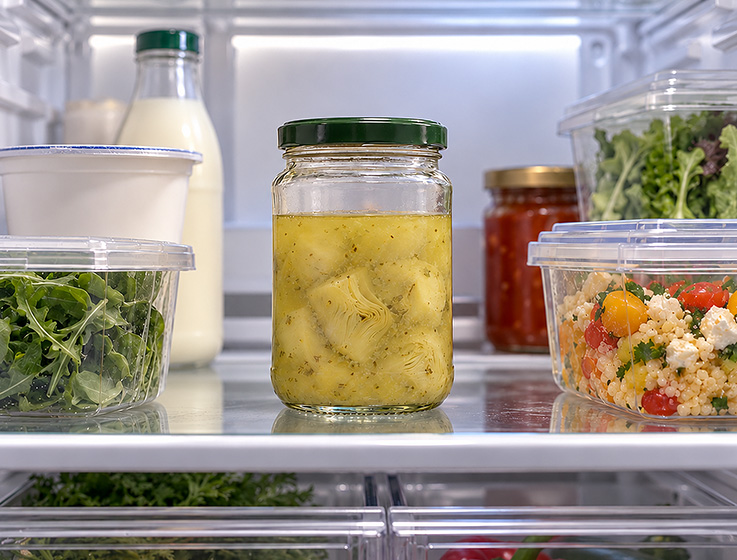
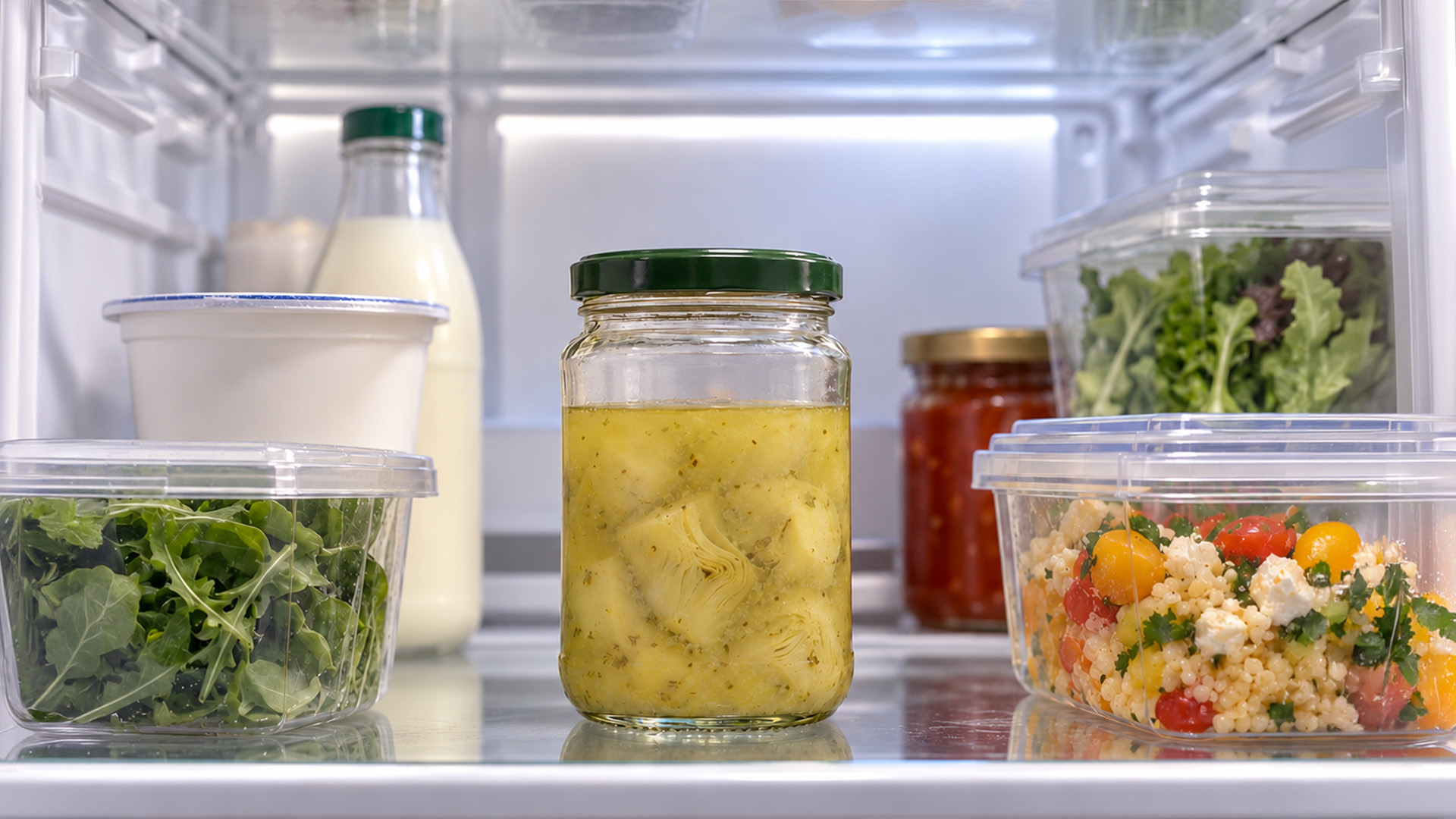
Have you ever taken a bottle of olive oil out of the refrigerator and noticed that it looks different? What was once clear and smooth may appear cloudy, thicker, or even contain small whitish flakes.
This is a completely natural reaction to cold temperatures, and it has everything to do with the oil’s composition.
What happens when olive oil gets cold?
Olive oil is primarily made up of triglycerides, which contain different fatty acids. As temperatures drop, some of these fats begin to crystallize, gradually changing from liquid to solid.
These tiny crystals scatter light, giving the oil a cloudy, milky appearance. In some cases, the oil may even become partially solid.
Not all olive oils react to cold in exactly the same way. The process depends on their natural fatty acid composition and how low the temperature gets.
Does cloudy olive oil mean it has gone bad?
The good news is that crystallization caused by cold temperatures is a natural, reversible process.
Once the oil returns to room temperature, the crystals gradually melt, and the oil regains its usual appearance. Cloudiness caused by chilling does not, by itself, mean the oil has spoiled or lost its quality.
Here’s another interesting fact: the so-called “fridge test” is sometimes used to judge whether an olive oil is pure or authentic. However, research from the UC Davis Olive Center has shown that refrigeration is not a reliable method for determining olive oil quality or authenticity.
What’s the best way to store olive oil?
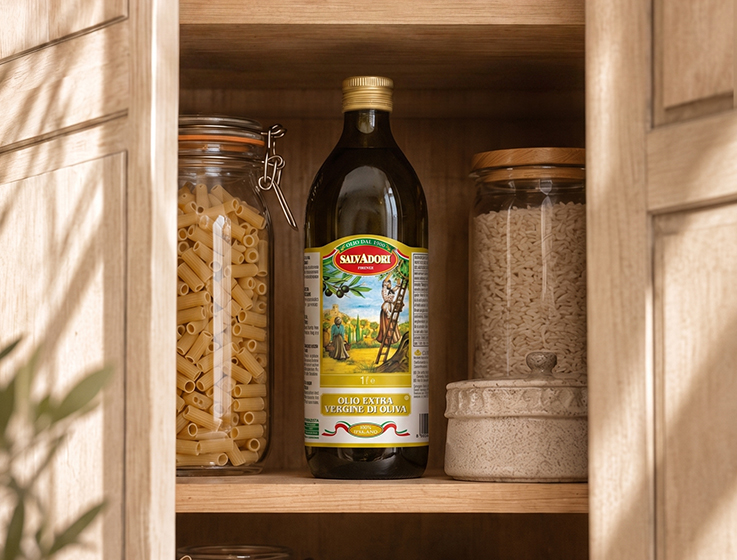
For everyday use, olive oil does not need to be refrigerated. The best option is to keep it in a cool, dry place, away from direct sunlight, heat sources and significant temperature fluctuations.
If your olive oil has turned cloudy in the fridge, simply allow it to return to room temperature naturally, without applying direct heat.
For over a century, Salvadori has focused on carefully selecting, testing and packaging its oils to meet high quality standards.
Understanding how olive oil behaves and how to store it properly helps preserve its flavor, aroma and quality, so you can enjoy it at its best.